

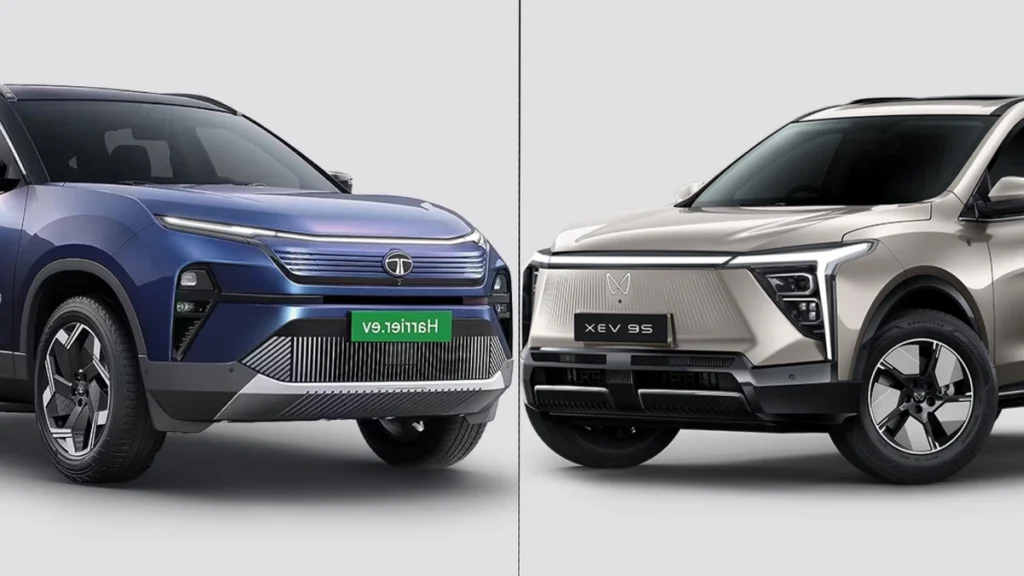
So, you’re thinking about making the leap to electric, huh? Smart move! The future is electric, and India’s gearing up for it in a big way. But with a growing number of EVs hitting the market, how do you even begin to choose? That’s where we come in. Today, we’re pitting two promising contenders against each other: the Mahindra XUV 9S and the Kia Carens Clavis EV. Buckle up, because this isn’t your average spec-sheet comparison. We’re diving deep.
The Big Question | Why These Two?
Let’s be honest, there are plenty of electric SUVs and MPVs vying for your attention. But the Mahindra XUV 9S and the Kia Carens Clavis EV represent two distinct approaches to the same goal: providing a practical, family-friendly electric vehicle for the Indian market. What fascinates me is how each company is leveraging its strengths – Mahindra’s rugged SUV heritage versus Kia’s focus on stylish and feature-packed MPVs – to create compelling EVs. This electric vehicle comparison isn’t just about numbers; it’s about philosophies.
Mahindra, with its XUV lineage, is likely to target buyers looking for a robust, go-anywhere electric SUV. Think of it as the electric version of their popular XUV700, but with zero tailpipe emissions and a whole lot of future-cool tech. On the other hand, Kia, riding high on the success of the Carens MPV, is aiming to electrify the family carrier segment. The Clavis EV, expected to be positioned as a more premium offering, could tempt those seeking a spacious and luxurious electric people-mover.
Design and Practicality | A Matter of Taste (and Space)
Design is subjective, of course, but it’s also a critical factor for many buyers. Mahindra is expected to carry forward the aggressive and muscular design language of the XUV series. Think bold lines, a commanding presence, and perhaps some futuristic tweaks to signal its electric powertrain. Kia, on the other hand, is known for its sophisticated and modern designs. The Carens Clavis EV might sport a sleeker, more aerodynamic profile compared to its ICE counterpart, while retaining its spacious cabin and versatile seating configurations.
But it’s not just about looks. Practicality is paramount, especially in India. We need to see how these EVs handle our roads, our traffic, and our charging infrastructure. Ground clearance, boot space, and seating comfort will be crucial factors. Also, think about the interior – will Mahindra opt for a minimalist, tech-heavy cabin, or will Kia prioritize luxury and premium materials? These details will significantly impact the overall ownership experience.
Performance and Range | The Heart of the Matter
Here’s where the rubber meets the road – or rather, where the electrons power the wheels. Battery capacity , range, and motor output are the key metrics here. And, honestly, this is the area where information is currently scarce, as both vehicles are still under development. What we can do is speculate based on current industry trends and the competition.
Expect both EVs to offer a range of at least 400-500 km on a single charge, which should be sufficient for most daily commutes and even some out-of-town trips. Motor output will likely be in the 150-200 horsepower range, providing adequate performance for city driving and highway cruising. But here’s the thing: performance isn’t just about raw power. It’s also about efficiency. How well do these EVs convert battery energy into usable motion? How quickly can they accelerate from 0 to 100 kmph? These are the questions we’ll be eager to answer once the official specs are revealed. The one thing you absolutely must double-check once the official specs are revealed is the battery warranty. It’s a crucial aspect of EV ownership that often gets overlooked.
Features and Technology | The Gadget Factor
In today’s world, cars are more than just modes of transportation; they’re rolling tech platforms. Expect both the Mahindra XUV 9S and the Kia Carens Clavis EV to be packed with features, from advanced driver-assistance systems (ADAS) to connected car technology. What fascinates me is how each manufacturer will integrate these features and how intuitive they will be to use. Will Mahindra offer a rugged, off-road-focused infotainment system, or will Kia opt for a more luxurious and user-friendly interface?
Things like a large touchscreen infotainment system, a digital instrument cluster, wireless smartphone connectivity, and a premium sound system are almost a given. But the real differentiators will be the unique features and innovations that each manufacturer brings to the table. Perhaps Mahindra will offer advanced off-road driving modes, while Kia might focus on enhanced passenger comfort and entertainment features. According to various automobile blogs, the launch date of these vehicles will be towards the end of 2024. As per the guidelines mentioned in several automobile magazines , both cars will feature Level 2 ADAS.
Don’t forget about safety! Features like multiple airbags, ABS with EBD, electronic stability control, and hill-start assist should be standard. But the real question is whether these cars will achieve high safety ratings in crash tests. Safety is not something to be compromised on, especially when it comes to family vehicles.
Pricing and Value | The Bottom Line
And finally, the million-dollar question: how much will these EVs cost? Pricing will be a critical factor in determining their success in the Indian market. The XUV 9S and the Carens Clavis EV will need to be competitively priced against each other and against other EVs in their respective segments. What fascinates me is how manufacturers balance the cost of the battery pack (which is the most expensive component in an EV) with the need to offer a compelling price point.
Government subsidies and incentives will also play a crucial role in making these EVs more affordable. Expect Mahindra and Kia to leverage these incentives to offer attractive pricing to customers. But price isn’t everything. Value for money is what really matters. Buyers will need to consider the overall ownership experience, including running costs, maintenance, and resale value. The charging infrastructure and the availability of charging points are crucial factors in the purchase decision of an EV.
Ultimately, the choice between the Mahindra XUV 9S and the Kia Carens Clavis EV will depend on individual preferences and priorities. Do you value ruggedness and off-road capability, or do you prefer luxury and comfort? Are you looking for a spacious family carrier, or are you willing to sacrifice some space for a more agile driving experience? These are the questions you need to ask yourself before making a decision. Automotive innovation is making these vehicles safer and more comfortable for Indian consumers. The maintenance costs for electric vehicles are also lesser as compared to IC engine cars.
Let me rephrase that for clarity: Choosing between the Mahindra XUV 9S and Kia Carens Clavis EV boils down to your personal needs and lifestyle. Thinking of going for road trips frequently? The Mahindra with its powerful battery and muscular build would be ideal. Need a comfortable and stylish car for city commutes? The Kia would be a better choice.
And here’s the thing: The EV landscape is rapidly evolving. New models are constantly being launched, and battery technology is constantly improving. So, it’s important to stay informed and do your research before making a purchase. Don’t just rely on what you read in articles like this one. Visit dealerships, test drive the cars, and talk to other EV owners. Because, let’s be honest, the best way to choose an EV is to experience it for yourself.
Ultimately, I believe both the Mahindra XUV 9S and the Kia Carens Clavis EV have the potential to be game-changers in the Indian EV market. They represent a new era of electric mobility, where practicality, performance, and sustainability come together in a compelling package. The electric car market is rapidly evolving in India. The Mahindra XUV 9S features will be different from that of Kia. Also, the Kia Carens Clavis EV specifications will be different.
FAQ Section
Frequently Asked Questions
What if I want to use it for off-roading?
If you are planning to use your car for off-roading, then the Mahindra XUV 9S might be a better choice. This is because the Mahindra XUV series are known for its ruggedness and off-road capabilities. However, until the cars are released we would not know for sure.
What will be the price range for both the vehicles?
The price range for both the vehicles will depend on the battery capacity, motor output, and features offered. However, expect them to be priced competitively against other EVs in their respective segments.
Will the charging infrastructure be able to cope up with increased electric vehicles on the road?
The government is investing heavily in expanding the charging infrastructure across the country. However, it will take time for the infrastructure to catch up with the growing number of EVs on the road. Private companies are also investing in setting up charging stations, which should help to improve the situation.
What if I want to buy an EV now?
There are several other EVs available in the Indian market right now. You can check out the Tata Nexon EV, MG ZS EV, and Hyundai Kona Electric. These EVs offer a good balance of range, performance, and features.
Where can I find the most updated details on these cars?
Always check the official websites of Mahindra and Kia for the latest and most accurate details. CarDekho is also a good website for comparisons.
So, there you have it. A detailed comparison of the Mahindra XUV 9S and the Kia Carens Clavis EV. Which one will you choose? Only time will tell. The electric vehicle revolution is truly a game changer and will forever change our relationship with automobiles!


